
ISS-FMA World Meeting 2026: Empowerment of Young People to be Protagonists of Social Change
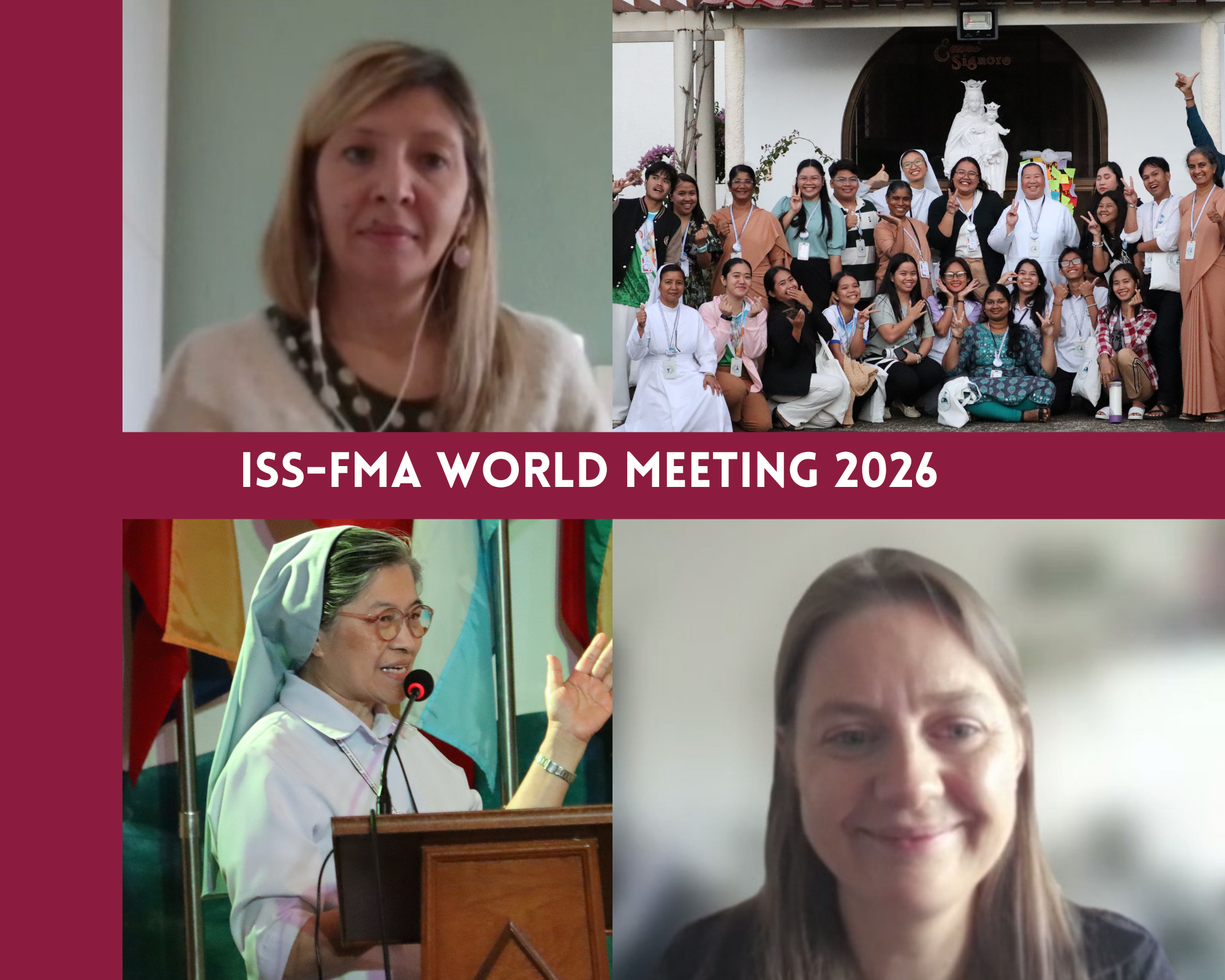
The IV World Meeting of the ISS-FMA, promoted within the Programming of the General Council of the daughters of Mary Help of Christians (Salesian Sisters) for the six-year period 2022–2027, took place in Manila (Philippines) from March 9 to 13, 2026. The meeting gathered participants from different regions of the world, with 68 attending in person – from the Philippines, India, the Democratic Republic of Congo, Benin, Colombia, and the Dominican Republic – and 14 joining online from Brazil, Italy, and Spain. Among the participants were Sr. Sarah Garcia, Director of the IIMA Human Rights Office in Geneva, and Sr. Runita Borja, General Councilor for the Youth Ministry Sector.
The theme of the meeting, “Empowerment of Young People to be Protagonists of Social Change”, guided the reflections and discussions throughout the event. Its general objective was to strengthen the mission of the FMA Institutions of Higher Studies in empowering educators and young people to take responsibility in society. More specifically, the meeting aimed to analyze the challenges faced by young people in today’s world, promote a Salesian understanding of social responsibility, deepen the principles of Christian humanism, and plan future actions for the next six years.
On March 11, Sarah Garcia and Maria D’Onofrio, respectively Director and Advocacy Officer of the IIMA Human Rights Office, offered significant contributions presenting on human rights and youth engagement.
Sarah offered insights on human rights. Referring to the Universal Declaration of Human Rights, she underlined its importance in placing the human person at the center of the global agenda and in establishing universal standards for human rights protection. She also presented the work of the IIMA Human Rights Office in Geneva, highlighting its commitment to promoting a culture of human rights and empowering young people. She concluded by encouraging everyone to become aware of injustices, recognize their responsibility, and actively work for justice, peace, and solidarity.
Maria focused on the importance of youth participation in the UN Human Rights Council. She acknowledged that, although significant progress has been made, it can sometimes feel insufficient in light of the many challenges young people still face in accessing their human rights. For this reason, she emphasized that such progress should neither be taken for granted nor seen as a final achievement. Instead, she called for continued commitment and effort to ensure that youth rights and youth-related issues are consistently included in the agenda of the Council. She underlined that young people face specific human rights challenges that require targeted attention, but at the same time they are essential partners in promoting and protecting human rights within their communities.
On the same day, Helen Griffiths from the Child and Youth Rights Unit, Office of the United Nations High Commissioner for Human Rights (OHCHR) also intervened presenting the “Youth Rights Advocacy Toolkit: Empowering young people to claim their rights”.
She began by introducing the work of the United Nations Human Rights Office, with particular attention to its commitment to promoting and protecting the rights of young people. Central to her presentation was the concept of meaningful youth participation, which goes far beyond symbolic involvement, as it requires inclusive partnerships that value diversity, as well as genuine intergenerational collaboration between young people and adults. Moreover, participation should not be occasional or superficial, but based on long-term engagement, supported by clear mechanisms for feedback and accountability to ensure that young voices truly influence decision-making processes.
Helen addressed the crucial relevance of youth rights advocacy and presented the Youth Rights Advocacy Toolkit, a key resource developed through the partnership between OHCHR, Education Above All and Silatech. This is a project aimed at empowering and mobilizing young people, particularly those in vulnerable situations, and to stand up for their human rights. The toolkit represents the result of extensive consultations with young people, including the contribution of a Youth Advisory Board composed of ten young representatives, and it is specifically designed to support a wide range of actors: young people and youth activists, young human rights defenders, young peacebuilders, as well as youth-led, youth-focused, and youth-serving organizations.
Helen also highlighted the launch in 2023 of the YES: Youth Empowerment System, an online platform developed through a partnership between the OHCHR and Education Above All, designed to help young people learn about human rights and make change in their communities.
In addition, she shared concrete success stories, such as the UNICEF Italy initiative “The Future We Want,” which demonstrates how young people can meaningfully contribute to shaping policies and societal visions.
We are truly grateful for her presence and contribution. It was a privilege to welcome a representative from the OHCHR to this event, and her intervention greatly enriched the meeting. Moments like this help to strengthen and deepen the collaboration between institutions, civil society, and young people, encouraging a shared commitment to building a more just and inclusive world.