
The Right to Development at 40: From Commitment to Participation
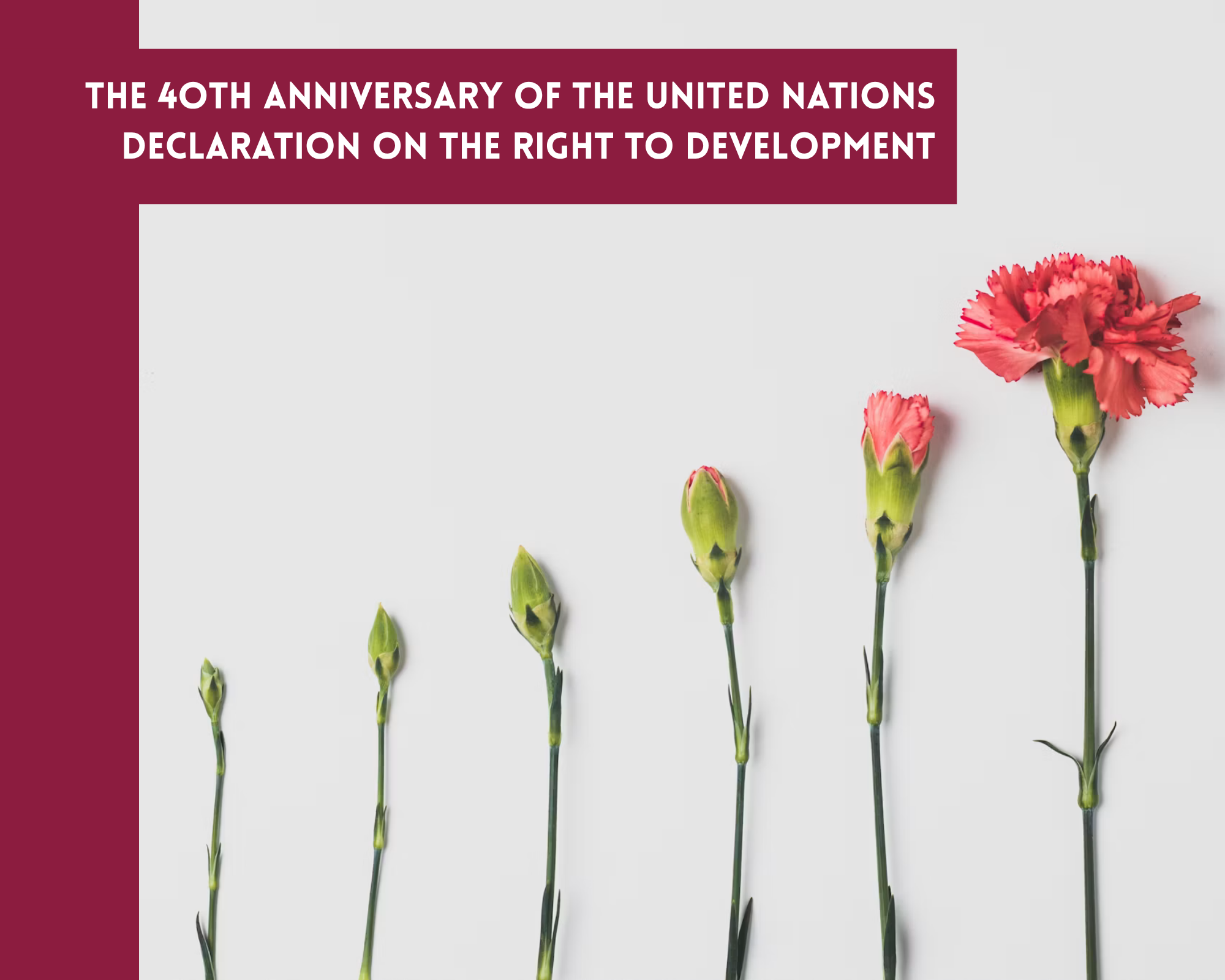
The international community marks 40 years since the adoption of the United Nations (UN) Declaration on the Right to Development. The Declaration affirmed development as an “inalienable human right” and recognized the right of every human person to participate in, contribute to, and enjoy economic, social, cultural, and political development in which all human rights and fundamental freedoms can be fully realized.
During the 63rd session of the UN Human Rights Council (HRC), a biennial panel on Right to Development was held to commemorate the 40th anniversary of the Declaration. The discussion provided an opportunity to take stock of the achievements, obstacles, and challenges encountered over the past four decades in implementing the Declaration at the national, regional, and international levels. Despite important progress, development continues to be marked by inequalities, structural barriers, and unequal access to opportunities and resources.
On 18 September 2026, in conjunction with the HRC63 session, a parallel event, “Right to Development: Where Do We Stand?” was organized by the Associazione Comunità Papa Giovanni XXIII (APG23). The Istituto Internazionale Maria Ausiliatrice (IIMA) and VIDES International were among the co-sponsors.
Sr. Sarah Garcia, Executive Director of the IIMA Human Rights Office and one of the speakers at the side event, highlighted that development is authentic when it promotes integral human development, respects the dignity and rights of every person, strengthens communities, and includes care for our common home. For development to be truly integral, education is indispensable.
For IIMA and VIDES International, this means continuing to invest in education, accompany vulnerable communities, promote the participation of young people, defend human rights, strengthen local capacities, and foster a culture of solidarity and care. It means becoming “weavers of hope.”
As Pope Leo XIV underscored in Magnifica Humanitas:
“For individuals as well as for nations, development is both a duty and a right. […] The quality of development is measured by the ability to integrate justice toward people and the care of our common home, and to promote dignified living conditions, access to necessary goods, just social relations, care of creation, and consideration for future generations.” (M.H., 83–84)
Development is, therefore, our shared responsibility—as States, organizations, communities, and individuals—to become co-creators of a sustainable, humane, and fraternal world.