Celebrating the 15th Year Anniversary of the UN Declaration on Human Rights Education and Training
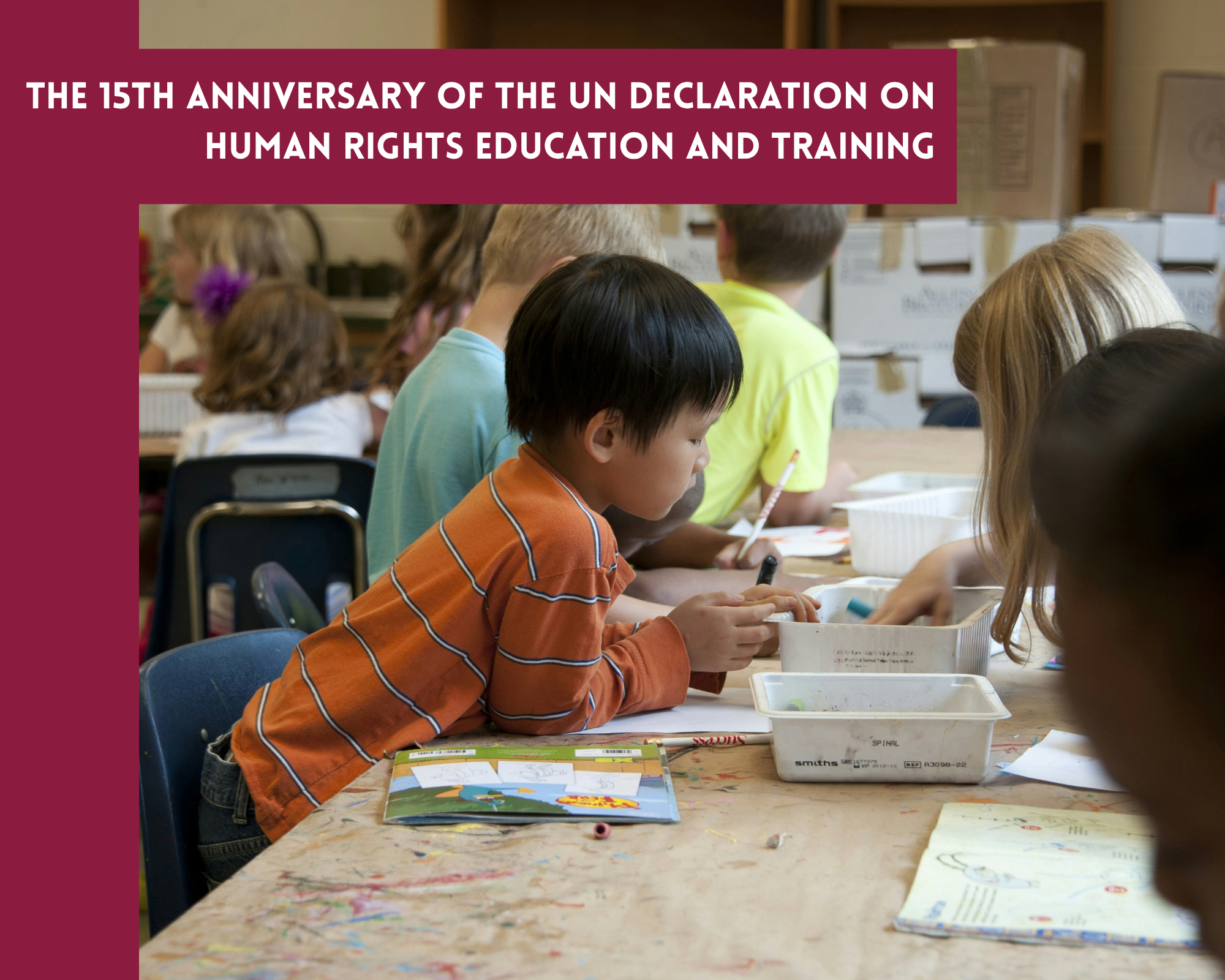
On 15th of September 2026, a High-Level Panel on the Fifteenth Anniversary of the Adoption of the United Nations Declaration on Human Rights Education and Training took place during the 63rd session of the Human Rights Council to consider good practices, challenges and the way forward for strengthening its implementation. The panel was framed in the ongoing fifth phase (2025-2029) of the World Programme for Human Rights Education, focusing on human rights education for children and youth.
In his introductory remarks, Mr. Volker Türk, United Nations High Commissioner for Human Rights, stated the need to ensure that the Universal Declaration of Human Rights is known, understood and accessible to everyone, so that individuals are aware of their rights and responsibilities and are better equipped to respect the rights of others. He further stressed the importance of inclusive education grounded in human rights, which promotes equality, non-discrimination, respect for diversity and meaningful participation.
H.E. Mrs. Davaasuren Gerelmaa, Ambassador, Permanent Representative of Mongolia to the UN in Geneva, began her keynote statement by emphasizing the importance of grounding human rights education within national education systems and translating commitments into concrete action plans involving a wide range of stakeholders. She highlighted Mongolia’s national efforts to develop human rights education programmes aimed at strengthening the protection and promotion of human rights.
Following these comments, Mr. Goran Gjorgjiev, Regional Director, World Organization of the Scout Movement, underscored the importance of translating international human rights principles into concrete practice through dialogue, participation and shared responsibility. He emphasized the contribution of partnerships with the United Nations system in strengthening the link between international human rights standards and their implementation at the local level.
Ms. Marion Wanjiku Mutugi, Commissioner, Kenya National Commission on Human Rights, addressed the implementation of Kenya’s commitments to human rights education at the classroom level. Referring to SDG indicator 4.7.1, she underscored the importance of structured, evidence-based assessment of education policies, curricula and learning environments.
Mr. Alessandro Ienzi, Artistic Director, Raizes Teatro – Be Human, Be Yourself, a non-profit organization promoting human rights through theatre, emphasized that human rights should not remain abstract principles but should be taught, experienced and put into practice. He focused on the challenges faced by young people who lose the ability to envision a future for themselves, stressing the importance of creating conditions in which they can recognize that their voices matter and freely express their views within society.
During the interactive dialogue, many States highlighted the importance of sustained investment in human rights education, including through the ongoing fifth phase of the World Programme for Human Rights Education. Many States also acknowledged the importance of empowering young people and ensuring safe, inclusive, and supportive learning environments for all as key priorities. Among the NGO speakers, IIMA and VIDES delivered an oral statement highlighting the importance of human rights education in empowering children and young people to participate meaningfully as rights holders and agents of change (text | video). All texts and videos of oral statements are available on the IIMA website.
Let’s make human rights education a reality for all children and youth!